[Avatar: The Last Airbender first premiered on Feb. 21, 2005. So here’s my little way of saying “Happy 20th anniversary!” to one of my all-time favorite stories.]
This post, or variations of it, lives in my head rent free:
There’s a few layers of fun here: not only is Sokka luring away Fire Nation soldiers with the promise of a birthday party (a fun activity), but he is clearly having the time of his life doing so. Sixty episodes ago, it didn’t look like the idea would ever cross his mind.
I didn’t think much about the boy with the ponytail and boomerang when I first watched Avatar: The Last Airbender as a kid. But over the years, Sokka has become my favorite character from the show. And for good reason. Plenty of people have dissected Sokka’s courage and perseverance or how he developed as both a leader and strategist, finding his own version of healthy masculinity.
But today I want to sit with Sokka’s humor, to track his journey of how he went from a boy playing soldier insisting that there is no time for fun, to a warrior casually fooling an army of unwitting Fire Nation soldiers with the promise of hot cakes and sweet cream.
Sokka has been the comic relief character since episode 1, with sarcasm and slapstick being his main comedic flavors. He reacts to the situation, be it making funny noises when Appa’s snot gets all over him or being very clear about his hunger at the Southern Air Temple.
But in these early episodes, I felt that Sokka is funnier to the audience than to the other characters in-universe. In fact, I don’t think he even puns until episode 5 with “He’s an earthbender, right? Rocky! You know, because of all the rocks.” For a lot of Book 1, it feels like we laugh at him more so than laugh with him.
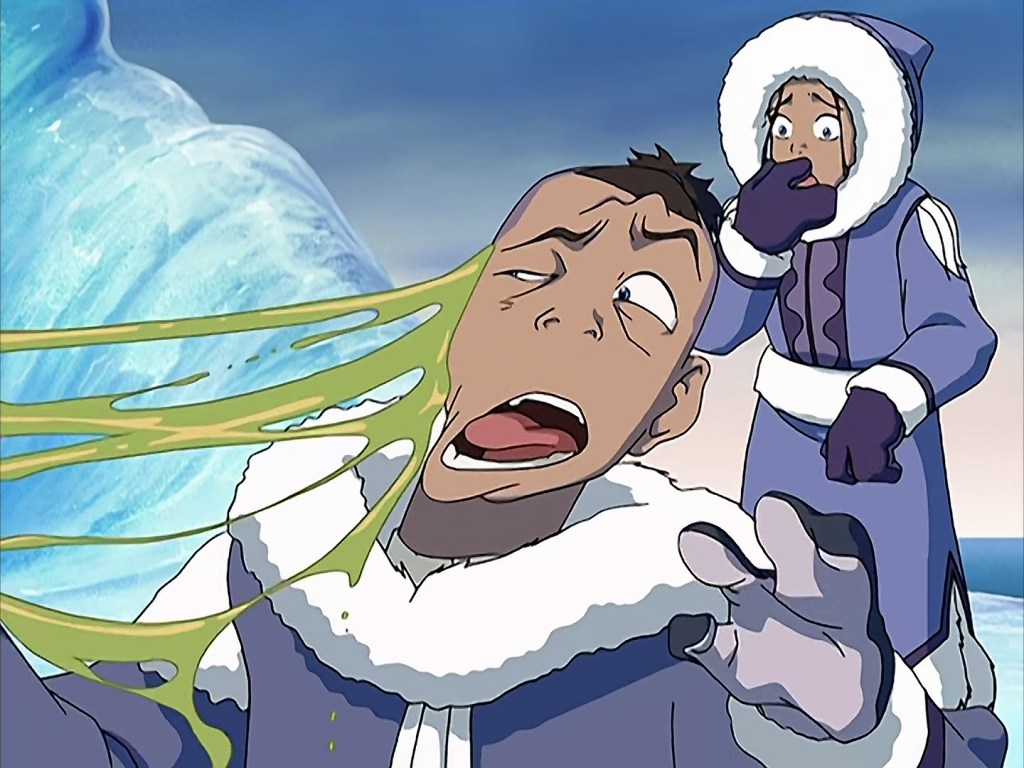
(The Boy in the Iceberg)
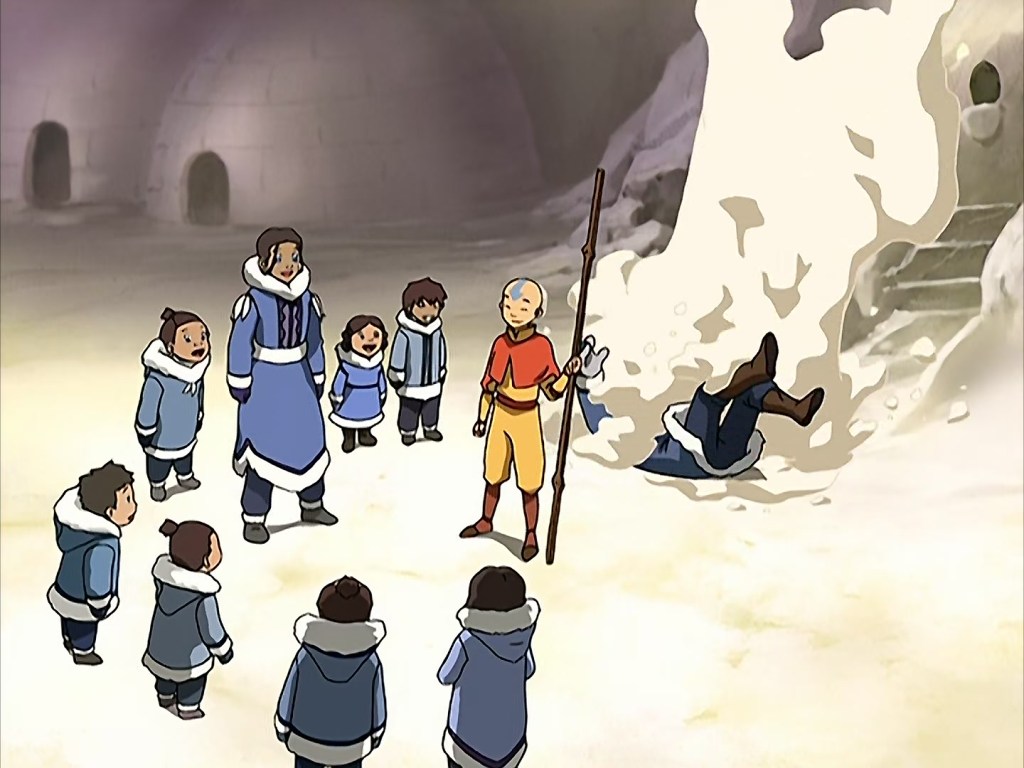
(The Boy in the Iceberg)
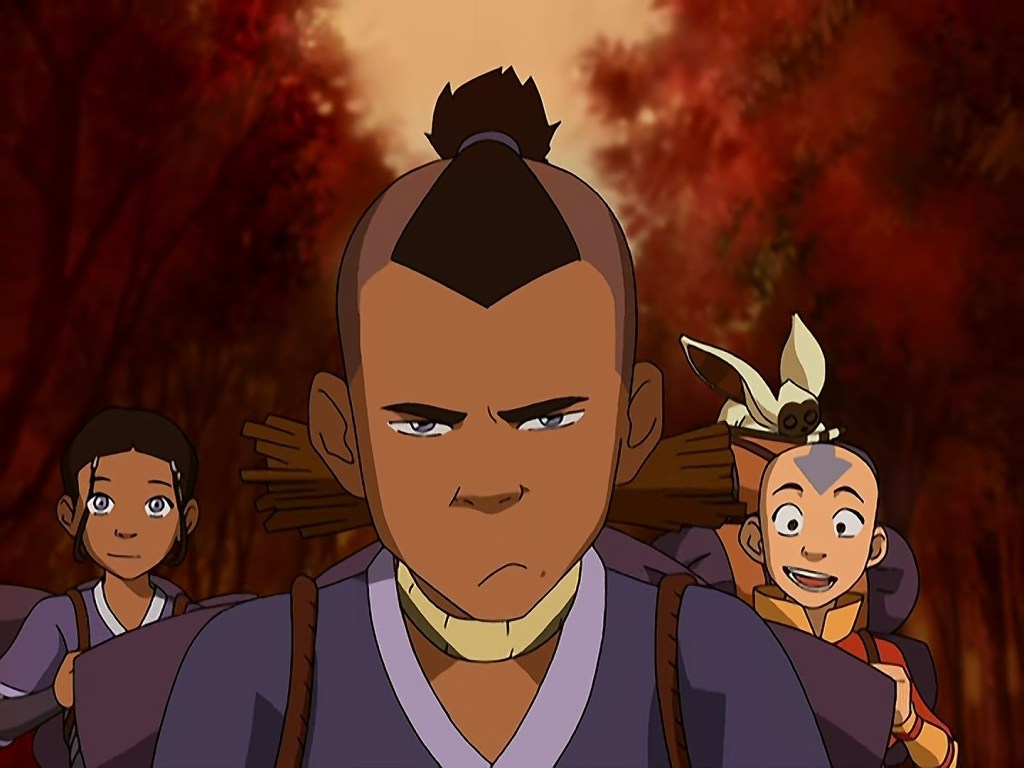
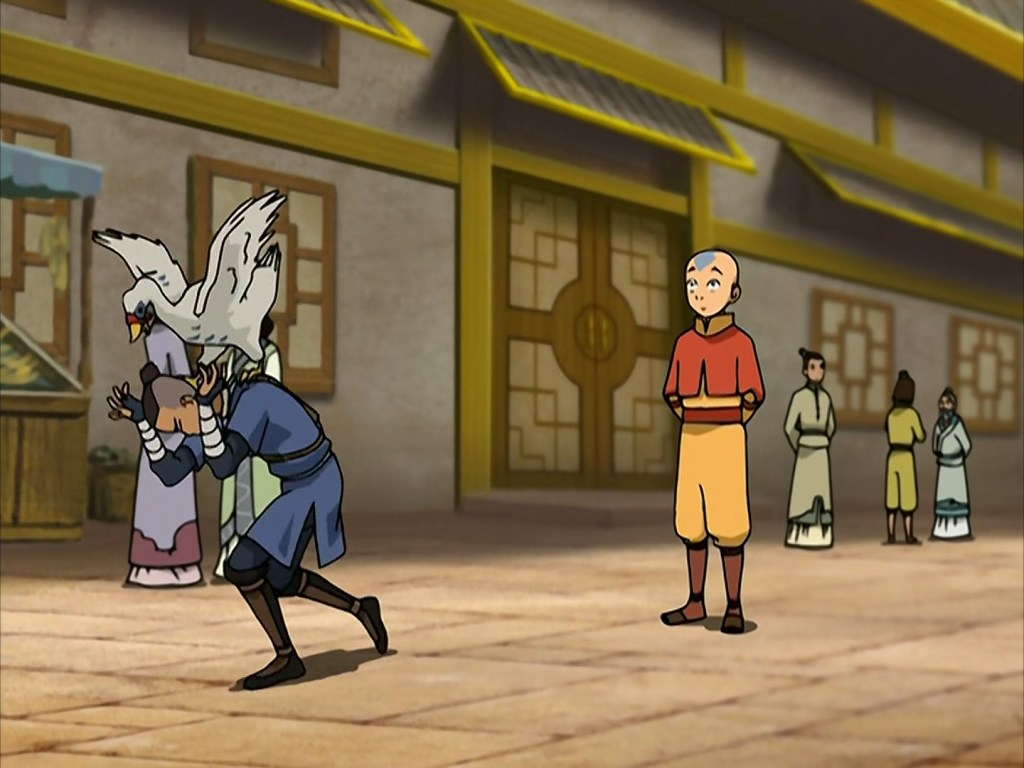
And I think that’s because Sokka begins the journey as a kid trying to be an adult. He takes on the responsibility of protecting the Southern Water Tribe and training the boys for battle. Even though he lacks experience, he feels like he doesn’t have a choice: he is the only young man left in the tribe, and his father had asked him to protect it.
This sense of duty has made Sokka strict in trying to meet the expectations placed on him. He is critical of Aang’s laidback attitude in the first episode. To be fair, Aang was unaware of the war at this point, but Sokka’s absolute rejection of fun remains. Which is especially ironic because Sokka’s antics give the series a lot of its comedic charm. And while he has the potential to be a great leader, he’s not there yet (See: “Jet”).
I don’t think there’s ever a point in the story where Sokka’s humor takes a dramatic shift, but he feels more openly fun-loving starting from Book 2. Sokka has grown much more comfortable with enjoying himself while on their quest. He enjoys his detective get-up (“Avatar Day”), shops for bags, and goes to a tournament for fun—with Aang’s agenda of finding an earthbending teacher a bonus (“The Blind Bandit”)—and gets himself into a haiku battle (“Tales of Ba Sing Se”). The iconic cactus juice scene is a sharp step up in zaniness compared to anything in Book 1.
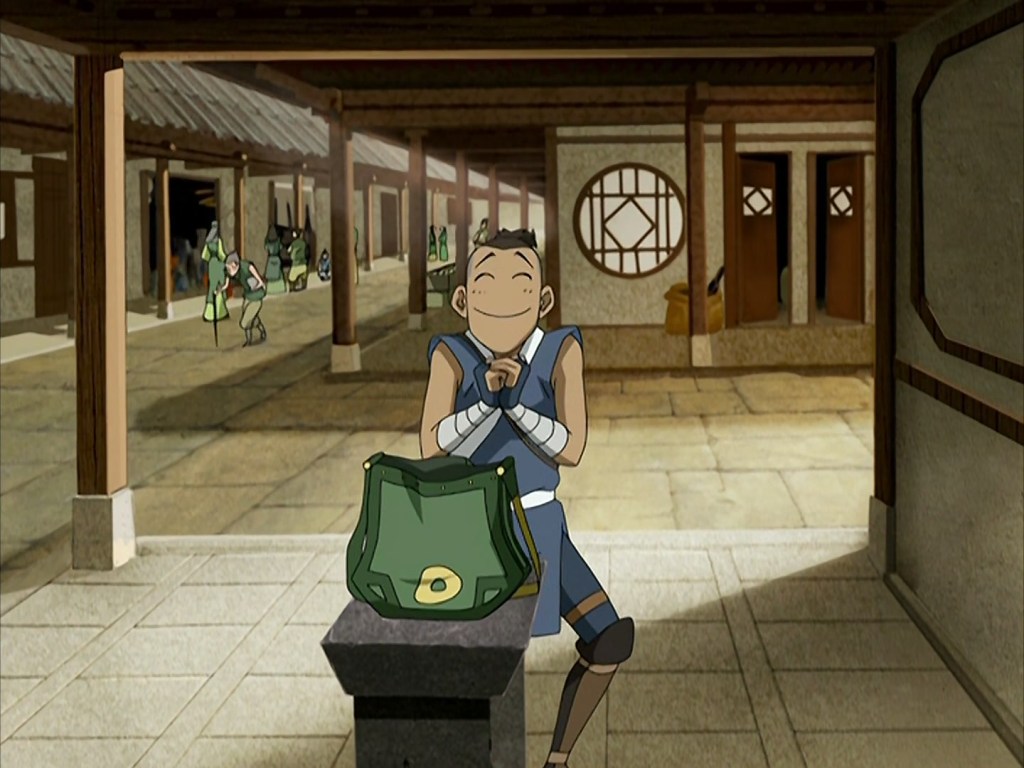
(The Blind Bandit)
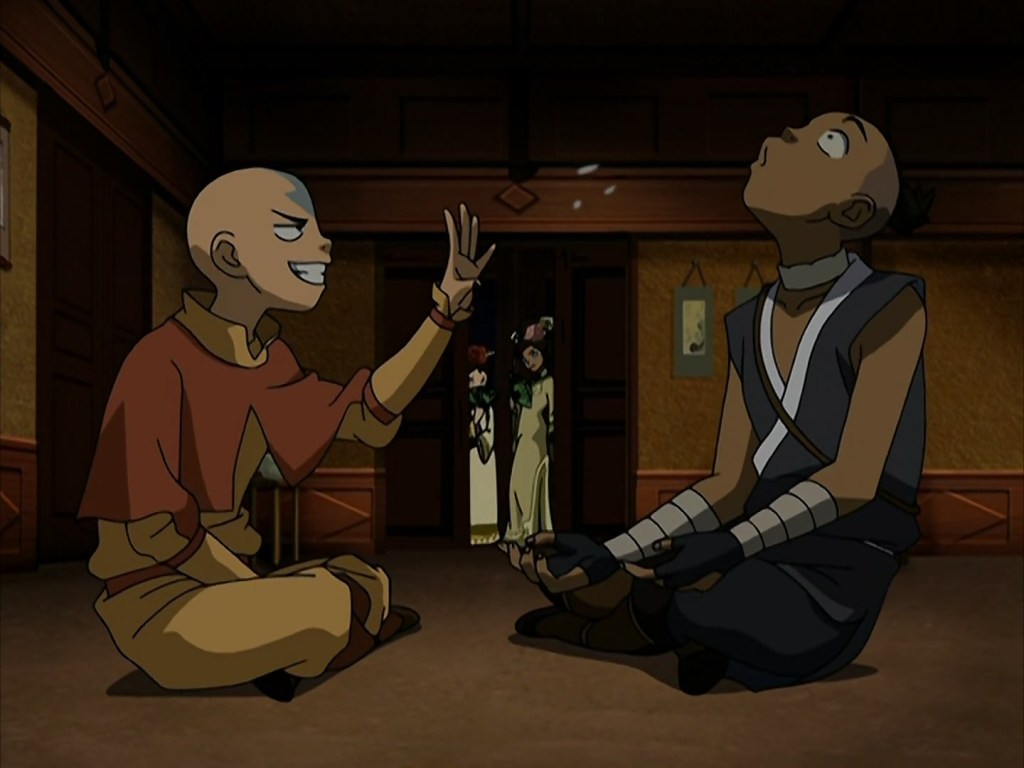
(City of Walls and Secrets)
I like to think that a lot of Sokka’s fun-ness was something that Aang helped bring out in him. The pair have one of my favorite dynamics in the show. Because individually, they’re geniuses. Aang is an airbending prodigy, the youngest to earn his arrows. Sokka is a strategist and a natural inventor, intuitively solving the hot air balloon problem and inventing the submarine.
But you put them together and suddenly sending a letter to Katara and saying it’s from Toph (who is blind) is a good idea. They crash into each other trying to bow. Sokka’s plan of getting himself and Aang into the Earth King’s gala involved dressing Momo up as a ghost. They make spooky spirit noises together. It’s just a nice touch that Sokka’s comedy synergizes well with Aang, who is much more fun-loving than Sokka is, but isn’t as comedic of a character.
Sokka’s penchant for fun becomes highlighted as a strength of his in Book 3, particularly in the season’s fourth episode, “Sokka’s Master.” It shows in his training with Piandao: painting his own face, landscaping for the sake of relaxation (and a nice drink), and adding a rainbow to his memory exercise. Why else would you add a rainbow except for fun? As Piandao notes, these actions reveal Sokka’s creative mind and versatile thinking–traits that make him a formidable warrior.
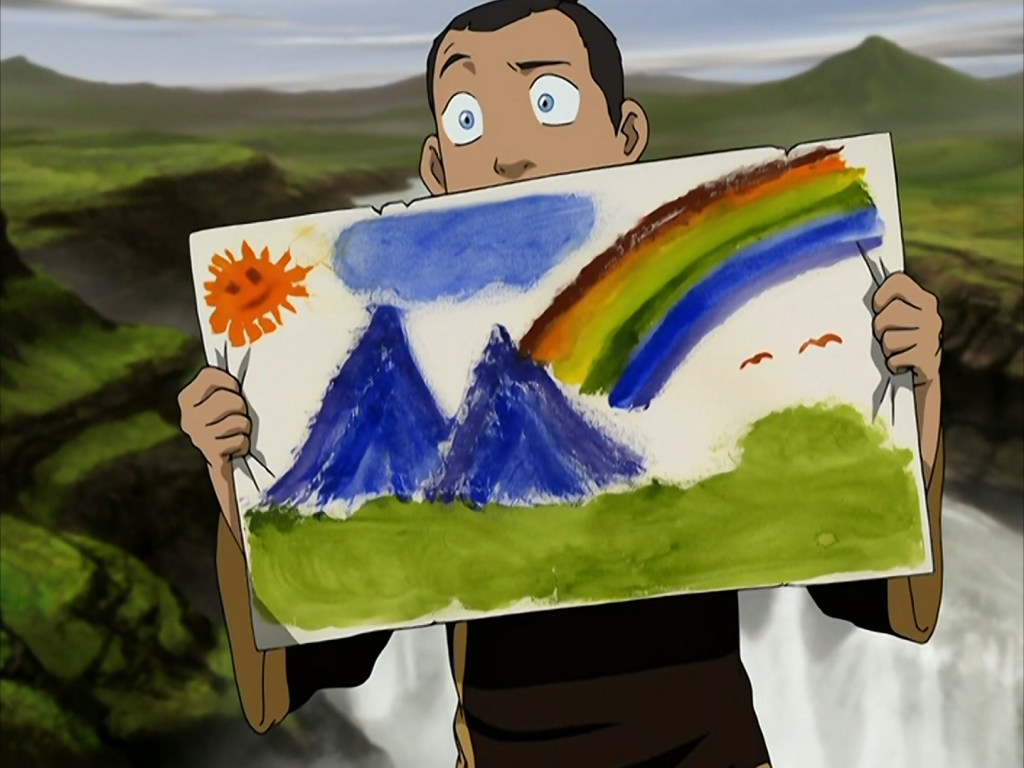
But his role as the comedic relief of Team Avatar is also highlighted, with Aang, Katara, and Toph bored out of their minds without him. There’s no one to alleviate the atmosphere, leaving it stale. And this void is in addition to the noodlebrains not being able to figure out where they are in the Fire Nation from a map. Sokka isn’t just the idea guy, and he’s not only a comic relief for the audience, but also for the characters who find his energy sorely needed.
The idea ties in nicely with what Sokka is told by his father: that being a man is knowing where he is needed the most. And throughout the story, Sokka grows to meet that definition of masculinity. He becomes the logistics person, keeping everyone on schedule. He plans the invasion and the escape from the Boiling Rock. And he’s the funny person because that has its own role to play in making sure the group stays functioning.
His desire to be the protector or the serious one doesn’t entirely go away. But now it’s mixed with a sense of humor instead of arrogance. See: “We’re in enemy territory. These are enemy birds!” from “The Headband.” He’s also still very strict about keeping them on schedule, to the point where it conflicts with Katara’s desire to help others in “The Painted Lady.”
The pillars of Sokka’s identity, namely that of a leader and strategist, take a hard hit following the failed invasion during the Day of Black Sun. His belief in himself is shattered, but there’s one thing that doesn’t change.
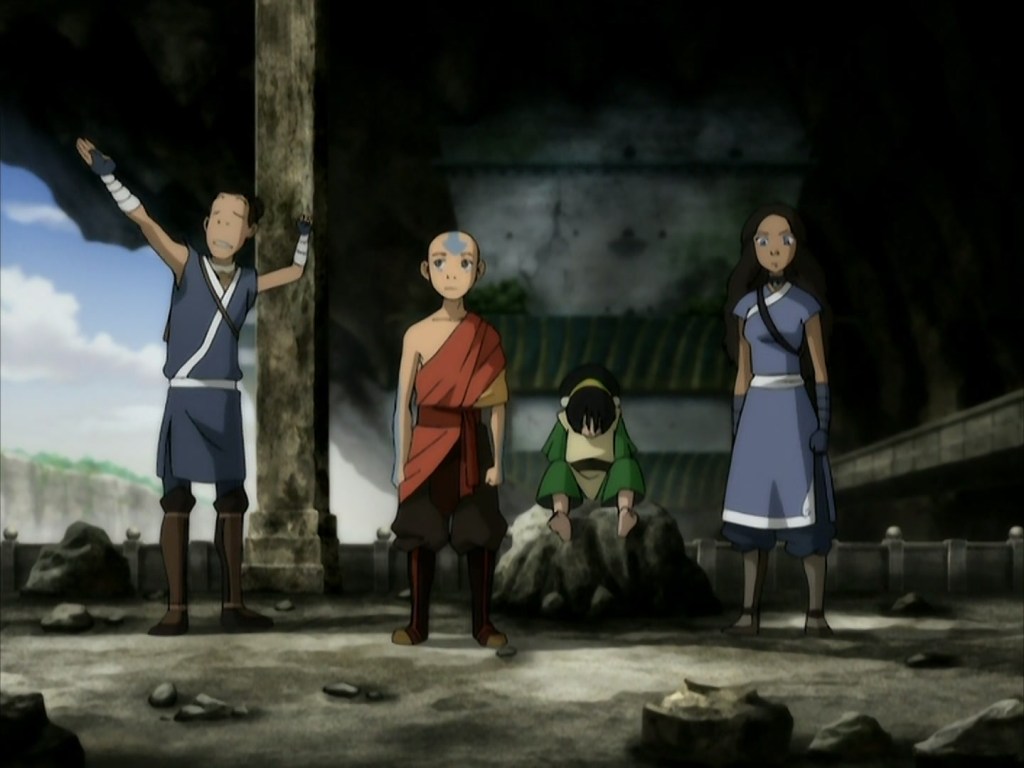
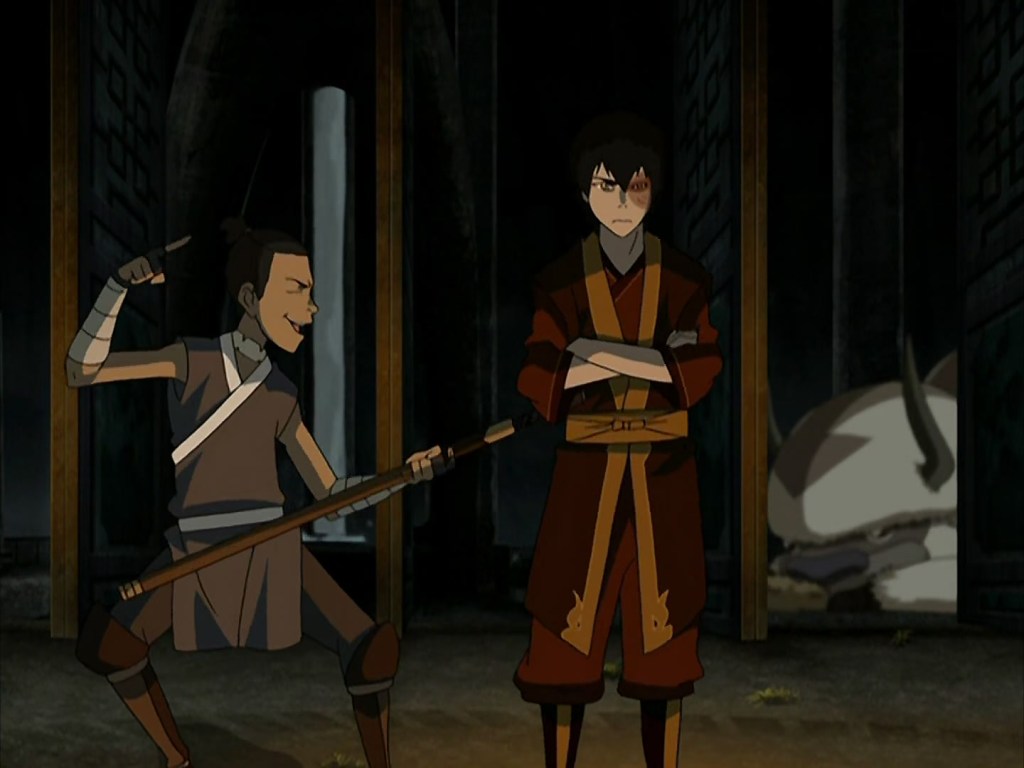
Sokka remains the comic relief in the episodes following their defeat, prodding Zuko with the space sword, some great boomerang related lines, and my favorite “Hey jerks, do you mind if I watch you jerks do your jerkbending?” Most interestingly he says, “Still got it,” to himself after the joke. Which might be me reading way too much into a throwaway line, but it’s a nice touch to know that while the stakes are more desperate and he’s recovering from defeat, he takes comfort in knowing that some things about himself stay the same.
By the end of the show, Sokka feels that his comedy is so core to himself that he is appalled that his jokes aren’t portrayed accurately by the Ember Island Players. It’s a critique of the play I can’t imagine “The Boy in the Iceberg” Sokka would have. That Sokka would have insisted on being portrayed as the strong buff warrior with overflowing leadership charisma. The priority regarding his reputation has greatly shifted, and while Ember Island Player Sokka is still a caricature, it feels more in-touch with the Sokka at this point in the story.
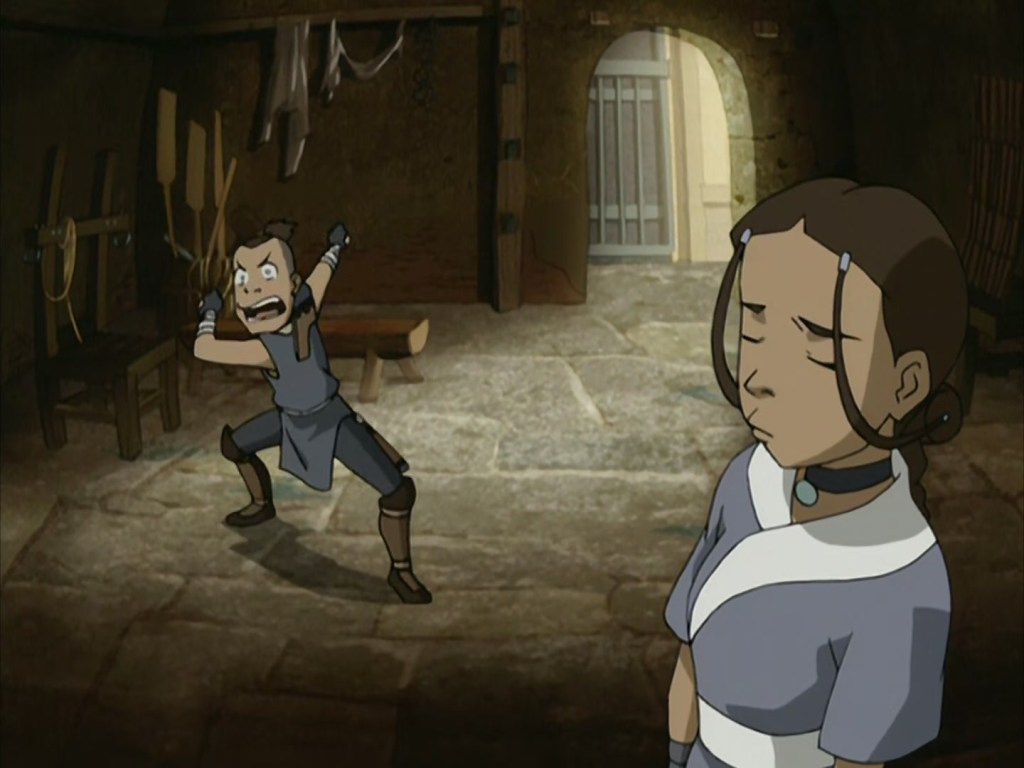

(Sozin’s Comet: Into the Inferno)

(Sozin’s Comet: Into the Inferno)
And now we get to Sozin’s Comet, which is a beautiful culmination of Sokka’s development throughout the series. As the strategist, he devises a way to destroy the airships. As a protector, he helps Toph navigate the airship roofs. And as a jokester, he announces a fake birthday party and proceeds to drop an entire crew of Fire Nation soldiers into the ocean, allowing them to continue to fly their stolen ship as they wish.
The fact that his ultimate strategy to destroy the airship fleet is inspired by a callback to the “airbending slice” joke in “Avatar Day” is just the cherry on top. It highlights that not only is humor—and its associated traits of creativity and versatility—are a part of Sokka, but he is more formidable because of it.
So perhaps Sokka was too harsh and dismissive of Aang when the young airbender proposed fighting firebenders with fun. But it’s great to see Sokka come around, and be wildly successful at it.
 Panisara (Por) Jaijongkit