Between the persistent drought and over-extraction by humans, the Colorado River is gasping for water. The states that make up the Colorado River Basin are looking for solutions to maintain their water resources.
The basin quenches the water demand for 40 million people, including large metropolitan areas outside of the basin itself, such as Denver, Los Angeles, and Phoenix.
Water is also removed from the river as an impact of climate change. Drought has had a chokehold on the Colorado River Basin for twenty years, and increasing temperatures only make matters worse.
“It increases evaporation and increases the growing season. So plants are pulling out more moisture, the atmosphere is drier, and the soil is drier,” explains Mitch Tobin.
Tobin is the director of The Water Desk, an initiative by the Center of Environmental Journalism focused on covering water issues in the American west. He hopes the Desk’s reporting will provide power and urgency to water scarcity in the region.

Reservoirs Lake Mead and Lake Powell are at their lowest points since they were filled in the 1930s and the 1960s respectively. Not a single drop from the Colorado River reaches the Californian gulf, where it would naturally empty.
The pressure is on to somehow make sure there is enough water to go around.
Luke Runyon is a journalist for KUNC radio and has been covering water issues in the Colorado River Basin since 2017. He observed that efforts in the water crisis are shifting away from increasing the water supply to making cuts in water use.
“More of the focus is on the demand side, because that is the one thing we can actually control,” said Runyon.
“Because climate change is making the river smaller, our demands have to shrink in order to match that declining supply.”
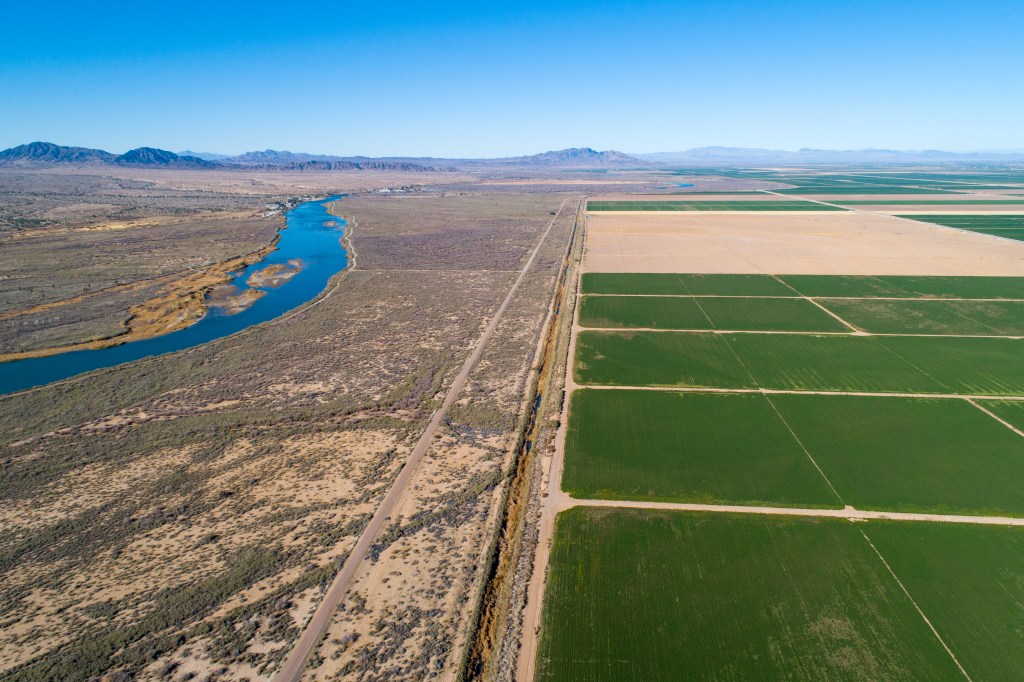
Roughly 80% of water in the Colorado River Basin goes to agriculture. So there is potential to change what crops are grown in the region and in what quantities. Other solutions include promoting water harvesting and limiting water use on lawns.
The seven states that make up the basin—Colorado, Wyoming, Utah, New Mexico, Arizona, Nevada, and California—are tasked with negotiations on how to decrease water demand.
But progress has been slow as each state pushes responsibility on another or refuses to share the burden. The federal government is now looking to step in and impose water cuts for the states to meet.
Runyon mentions the concept of “climate weirding,” which refers to how climate change is not static and is prone to making strange climate phenomenon occur. The recent great drenching of California in what should’ve been a dry year is an example.
His point is that projections currently display a dry future for the Colorado River, but the unpredictability of climate change may reverse the situation. While the possibility of a wetter southwest remains, the odds are low, and the urgency remains to conserve water in the Colorado River Basin.
Tobin ponders what would the federal government do to the dams of the Colorado River should the water disappear. “Maybe they would leave it there as a kind of monument to human hubris.”
 Panisara (Por) Jaijongkit